If you're shopping lift kits and truck accessories in Reading, start by deciding whether you need a leveling upgrade or a full suspension lift. A leveling upgrade corrects factory rake and keeps daily manners intact, while a suspension lift kit adds clearance, wheel travel, and larger tire fitment. You'll want exact year, trim, drivetrain, and suspension details to verify Rough Country fitment. Budget for tires, alignment, and accessories like steps, lights, or liners—you'll see how the right setup comes together.
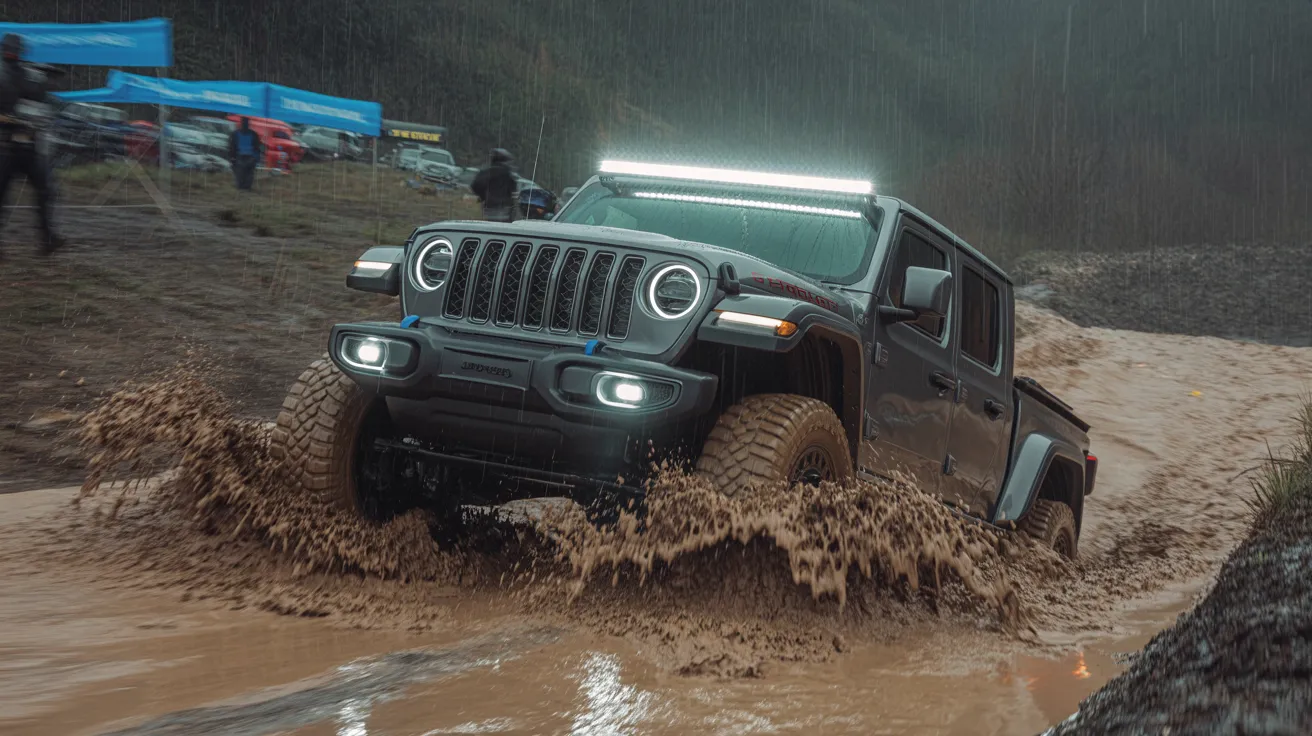
Essential Information
- Pick a leveling kit to correct factory rake while preserving near-stock performance and fitting slightly larger tires for everyday commuting.
- Go with a suspension lift for enhanced ground clearance, wheel travel, and off-road performance, understanding handling and steering may change.
- Check exact fitment with your truck's year, model, make, drivetrain, trim, cab, bed, and suspension system before ordering Rough Country parts.
- Match lift height and shocks to your application, whether commuting, trail driving, towing, or heavy off-road use.
- Reserve budget for beyond the kit price itself, with costs for alignment, labor, wheels, tires, shocks, and extra accessories like steps, lights, and liners.
Comparing Suspension Lift Kits and Leveling Kits
Although both upgrades alter your truck's stance, leveling kits and suspension lift kits solve different problems and deliver different results. A leveling kit typically raises the front to align with the rear, fixing factory rake with minimal change to geometry, ride height, and day-to-day drivability. You pick one when you desire a cleaner profile and room for slightly larger tires.
A suspension lift lifts the entire truck and revises key components to create more ground clearance and wheel travel. You'll see larger improvements in ride height, off-road capability, and tire fitment, but you should prepare for handling tradeoffs, steering shifts, and an elevated center of gravity. When you want subtle visual improvement, apply a leveling kit. If you need real clearance and articulation, go with a suspension lift and plan the supporting modifications according to your driving needs.
Which Rough Country lift kit fits your truck?
Start by gathering your truck's year, brand, and model, drive configuration, and your intended application, since Rough Country builds lift kits based on specific platform requirements and performance goals. This information determines which suspension parts, brackets, and fasteners install without issues without fitment or alignment problems.
Start by examining stock ride height, cab and bed configuration, axle setup, and whether your truck features 2WD, 4WD, or adaptive suspension. Rough Country compatibility guides make this easy, but you still need to confirm model compatibility against configuration-specific components and OEM package differences. A kit designed for a Silverado 1500 may not fit a Trail Boss, and a Ram with air suspension needs different provisions rather than a vehicle with coil suspension. Once you verify fitment first, you sidestep unexpected problems, compatibility issues, and reshipment delays.
Which Rough Country lift kit matches your driving style?
Select the kit to your driving patterns, and you'll get enhanced ride quality, reliability, and tire space without purchasing unnecessary capability. If your truck spends most days commuting, pick a simple Rough Country leveling kit or a 2 to 3.5 inch lift kit calibrated for daily comfort and consistent steering feel.
If you split time between pavement and trails, move up to a lifted suspension with upgraded shocks and adjusted control arm geometry. You'll enjoy enhanced off-road performance, superior articulation, and clearance for larger tires without taxing stock components. For heavier trail use, focus on lifted struts, N3 or Vertex dampers, and kits that maintain driveline angles under compression. A quality Rough Country package should match load capacity, speed, and terrain, and your preferred ride firmness.
Premium Rough Country Truck Accessories
Round out your lifted truck using Rough Country add-ons that tackle the real problem areas you'll encounter after lifting and upgrading tires. Begin with upgraded entry steps or skid plates, which recover ease of cabin entry and offer undercarriage protection as your truck sits higher and wider.
focus
What Budget Should You Plan for Your Build?
Once you've picked the lift kit and complementary parts, set a budget that covers more than the headline kit price. You'll need room for dampers, wheels, rubber, tire alignment, installation labor, and any drivetrain or steering corrections your platform requires. Brand reputation matters here; premium systems usually deliver tighter tolerances, better ride quality, and fewer install headaches. higher precision, better ride quality, and fewer install headaches.
In terms of practical budget estimates, expect entry-level spacer or leveling setups to begin at lower costs, whereas full suspension systems with control arms, tuned dampers, and larger tires climb quickly. Installation complexity, shop rates, and calibration work may contribute significantly. You should also price supplementary upgrades including gear changes, brake systems, and recovery equipment if trail use is planned. If cash flow matters, weigh financing options cautiously and stress reliability over flashy add-ons.
Questions You Might Have
How Do Lift Kits Influence Warranty Coverage?
Yes, lift kits can affect your factory warranty coverage, but they don't automatically void it. You encounter warranty issues if the dealer demonstrates the suspension modification led to or contributed to a failure. Powertrain, steering, suspension, and drivetrain claims often trigger dealer disputes. You should keep service documentation, choose quality parts, and follow service intervals. That allows you to challenge rejected claims and maintain protection in cases where the modification isn't responsible.
Do Bigger Tires Mean Re-Gearing?
Yes—should you jump several tire sizes, you'll typically require re-gearing. For example, when you move from 31s to 35s, your truck can feel sluggish, shift improperly, and build drivetrain stress under load. Adjusting gears reestablishes optimized gear ratios, enabling you to recover acceleration, towing performance, and transmission behavior. You may skip it for modest tire increases, but if power, fuel economy, or shift quality drop, it's usually the right call.
How Frequently Should You Inspect Lift Parts?
You need to examine lift components once you hit 500 miles, then at every oil change or 3,000 to 5,000 miles, depending on use. Regular maintenance checks help you spot wear on bushings, shock fluid leaks, damaged brackets, and alignment concerns ahead of time. Check Fastener torque post-aggressive terrain driving, cargo hauling, or hard impacts. When you operate in mud, salt, or rough terrain often, shorten intervals and examine suspension and steering parts more frequently.
Will a lift kit change towing or payload capacity?
Yes, related resource a suspension lift can alter your truck's towing and payload limits. When you raise ride height for additional dirt clearance, you shift suspension alignment, weight balance, and force distribution on parts. That can reduce stability when loaded and add drivetrain strain, most notably with bigger tires. You should stick with your manufacturer's ratings unless an engineered kit explicitly states revised capacities. Correct alignment, transmission ratios, and brake performance count as well.
Do Alignment Services require focus following the installation of truck accessories?
Yes—if components alter ride height, suspension configuration, steering geometry, or tire width, you need an alignment service. You'll feel the theory fast: slight changes can make your truck drift off-center, scrub tread, and compromise handling. A proper wheel alignment brings back camber setting, caster, and toe to standard. After particular upgrades, you may also need brake calibration for driver aid precision. You safeguard tire life, steering sharpness, and genuine safety by performing alignment checks promptly.
Conclusion
Selecting the right lift package and components copyrights on how you use your truck, what stance you want, and your spending limit. When you match a Rough Country lift kit with your driving style, you'll obtain power, ground room, and style which coordinate as efficiently as a calibrated engine. Add smart accessories, organize your budget responsibly, and you'll assemble a pickup that's reliable for streets, capable off it, and set for any future work.